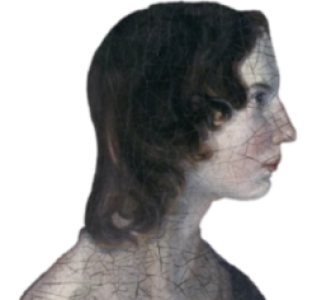
Maria Brontë (née Branwell), the mother of the Brontë sisters, was born on April 15, 1783, in Penzance, Cornwall, England, into a respectable middle-class family. The eighth of twelve children, she grew up in a close-knit, devoutly Methodist family. Her parents, Thomas Branwell, a successful tea merchant, and Anne Carne Branwell, ensured Maria received a good education—an unusual privilege for women of her time. This education, along with her natural intelligence and lively personality, made her a notable presence in her social circle.
Maria was known to be an articulate and thoughtful writer, leaving behind a collection of letters that display her wit, warmth, and sharp observations. These letters, many of which were written to her favorite cousin, Jane Branwell, provide a glimpse into her life and reveal her deep spirituality, strong moral principles, and independent mind.
In 1812, Maria met Patrick Brontë, an ambitious Anglican clergyman, while visiting her aunt in Yorkshire. The two shared a mutual interest in literature and religion and formed a strong bond despite their different backgrounds. Patrick, from a modest Irish farming family, was struck by Maria’s intelligence and character, and they married later that year in Guiseley, Yorkshire. The couple settled in the nearby village of Thornton, where Patrick had secured a position as curate.
Maria’s marriage to Patrick marked a new phase of her life, moving from the comfort and stability of her Cornish family to the more austere northern countryside of Yorkshire. Nevertheless, she adapted quickly and was known for her resilience and commitment to her family. Between 1814 and 1820, she gave birth to six children: Maria, Elizabeth, Charlotte, Branwell, Emily, and Anne. Despite the challenges of motherhood and her family’s frequent moves due to Patrick’s work, Maria was a loving and attentive mother who encouraged her children’s intellectual and creative development from an early age.
In 1820, the family moved to Haworth, where Patrick had been appointed as perpetual curate at St. Michael and All Angels Church. Unfortunately, this new beginning would be overshadowed by illness. By the spring of 1821, Maria began suffering from what would later be diagnosed as uterine cancer, a condition with limited treatment options at the time. She endured months of severe pain, during which Patrick arranged for the children to be cared for by relatives, allowing her to spend her final days peacefully. Maria passed away on September 15, 1821, leaving behind her six young children, the eldest of whom was only seven.
Maria’s death profoundly impacted the Brontë family. Her sister, Elizabeth Branwell, moved to Haworth to care for the children, helping to instill in them the values and resilience that Maria had upheld. While Maria’s life was brief, her influence on her children’s character and creativity was lasting. Through her letters and family’s recollections, she is remembered as a gentle, intelligent woman who laid the foundation for the imaginative brilliance that would later make the Brontë family famous.
 emilybrontë.com