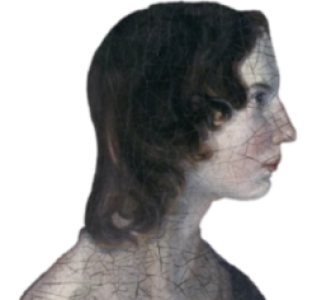
A detailed chronological timeline of the births, marriages, deaths and major events in the lives of the Brontës from 1744 to 1928:
1744 – 1800:
- c. 1744 – Anne Carne, mother of Maria Branwell (later Brontë) is born in Cornwall, England.
- c. 1746 – Thomas Branwell (originally Bramwell), father of Maria Branwell, is born in Penzance, England.
- c. 1757 – Hugh Brunty (or Prunty), father of Patrick Brontë, is born in County Down, Ireland.
- c. 1757 – Alice McClory, mother of Patrick Brontë, is born in County Down.
- 1776 – During this summer Hugh & Alice elope and marry at Magherally Church near Banbridge in County Down and then honeymoon at Warrenpoint.
- c. 1776 – Elizabeth Branwell, the sister of Maria, is born in Penzance.
- 17 March 1777 – Patrick Brunty, the eldest of the ten children of Hugh & Alice is born in a small two-roomed cottage in Emdale, Drumballyroney, Co. Down.
- 15 April 1783 – Maria Branwell is born in Penzance to successful merchant Thomas Branwell & his wife Anne Carne. Maria is the eighth child of twelve born, but only six children survive into adulthood.
- 1798 – Patrick undertakes several apprenticeship roles including as a blacksmith and a linen draper before settling on becoming a teacher.
1801 – 1810:
- 1 October 1802 – Winning a scholarship, Patrick moves to England to study theology at St John’s College, Cambridge. Upon entry he changes his surname from Brunty to Brontë.
- April 1806 – Patrick graduates as Bachelor of Arts following the conclusion of his four year course.
- August 1806 – Patrick is ordained a deacon by the Bishop of London.
- October 1806 – Patrick becomes curate of St Mary Magdalene Church in Wethersfield, Essex.
- c. 1808 – Hugh Brunty, father of Patrick, dies in Ireland aged about 50.
- 5 April 1808 – Thomas Branwell, father of Maria, dies in Penzance aged about 62.
- January 1809 – Patrick begins his brief curacy at Wellington, Shropshire under the Reverend John Eyton.
- December 1809 – Patrick becomes assistant curate at Dewsbury All Saints Church (now Dewsbury Minster) in the town of Dewsbury.
- 19 December 1809 – Anne Branwell (nee Carne), mother of Maria, dies in Penzance aged about 65.
- 1810 – Patrick becomes the first Brontë to be published with the publication of his poem ‘Winter Evening Thoughts’.
1811 – 1820:
- 1811 – Patrick is appointed assistant curate at St Peter’s Church, Hartshead serving there until 1815.
- 1812 – A distant call for help sends Maria from warm Penzance to West Yorkshire. She joins the recently established Woodhouse Grove School near Guiseley, Leeds. The Wesleyan boarding school, recently opened by her Uncle John and Aunt Jane, is desperately in need of extra hands and so Maria starts her role there as junior matron.
- 1812 – While still curate at Hartshead, Patrick works as a classics examiner at Woodhouse Grove School. Here he meets his future wife Maria for the first time.
- August 1812 – Patrick & Maria are engaged at Kirkstall Abbey.
- 29 December 1812 – Patrick Brontë marries Maria Branwell at St Oswald’s Church, Guiseley following their brief courtship.
- 1813 – Patrick & Maria move into a house at 426 Halifax Road, Liversedge. Their two eldest daughters, Maria & Elizabeth, will both be born here.
- c. Early 1814 – Maria Brontë is born at 426 Halifax Road.
- 23 April 1814 – Maria is baptised at St Peter’s Church, Hartshead.
- 8 February 1815 – Elizabeth Brontë is born at 426 Halifax Road.
- 1815 – Patrick moves the family to 72-74 Market Street, Thornton becoming curate at the Old Bell Chapel.
- 26 August 1815 – Elizabeth is baptised at the Old Bell Chapel by John Fennell. Her godparents are John Scholefield Firth and his daughter Elizabeth.
- 21 April 1816 – Charlotte Brontë is born at 72-74 Market Street.
- 29 June 1816 – Charlotte is baptised at the Old Bell Chapel by Reverend William Morgan. Her godparents are the Reverend Thomas Atkinson and his fiance Frances Walker.
- July 1816 – Realising his growing household requires more help, 13 year old servant Nancy Garrs (De Garrs) joins the Brontë family at Thornton to help look after the children. Her sister Sarah also joins the household shortly after.
- 1817 – Charlotte’s life long friend Mary Taylor is born in Birstall. She would meet Charlotte at Roe Head School, Mirfield, in January 1831.
- 20 April 1817 – Charlotte’s life long friend Ellen Nussey is born in Birstall. She would meet Charlotte at Roe Head School, Mirfield, in January 1831.
- 26 June 1817 – Patrick Branwell Brontë is born at 72-74 Market Street.
- 23 July 1817 – Patrick Branwell is baptised at the Old Bell Chapel by Reverend William Morgan.
- 30 July 1818 – Emily Jane Brontë is born at 72-74 Market Street.
- 20 August 1818 – Emily is baptised at the Old Bell Chapel by Reverend William Morgan. The reverend’s wife, Jane Morgan and her mother, Jane Fennell, (formerly Jane Branwell, Maria’s aunt), are chosen to be Emily’s godparents.
- 17 January 1820 – Anne Brontë is born at 72-74 Market Street.
- 25 March 1820 – Anne is baptised at the Old Bell Chapel by Reverend William Morgan. Fanny Outhwaite and Elizabeth Firth are her godparents.
- 20 April 1820 – Following the death of the previous incumbent of Haworth, Rev. James Charnock, Patrick is offered the perpetual curacy at St Michael and All Angels’ Church by the Vicar of Bradford, Henry Heap, however his nomination deeply angers Haworth’s parish elders who actually hold the right to select their new priest and a standoff therefore ensues. Eventually this is resolved and on this day the new curate finally moves his young family six miles across the moors to Haworth Parsonage, a position he would hold until his death in June 1861.
1821 – 1830:
- 1821 – Elizabeth Branwell travels 400 miles to Haworth from Penzance and stays with the Brontës in order to look after the children and nurse her ailing sister Maria who is suffering from an unconfirmed terminal illness. Elizabeth will go on to stay at the parsonage for the rest of her life.
- 15 September 1821 – Maria dies aged 38 possibly from uterine cancer or sepsis.
- 22 September 1821 – Maria’s funeral takes place and she is interred in the newly established Brontë family vault in the church.
- 1822 – Alice Brunty (nee McClory) mother of Patrick, dies in Drumballyroney, Co. Down.
- 1823 – Maria & Elizabeth are sent to Crofton Hall girls boarding school at Wakefield but the prohibitive costs of sending his other daughters there as well means Patrick opts to seek out another school the following year.
- 2 September 1824 – The infamous Crow Hill Bog Burst occurs while young Emily, Anne & Branwell are out on the moors accompanied by the Garrs sisters. The bog, some four miles from the parsonage, bursts following a sudden earthquake-like rumble causing a significant landslide and flooding. The children escape the torrent and find shelter under the porch of nearby Ponden Hall. Patrick later recounts the phenomenon in one of his sermons.
- 1824 – Servant sisters Nancy & Sarah Garrs leave their employment with the Brontës.
- 1824 – 53 year old Tabitha Aykroyd replaces the Garrs sisters as the new family servant. She becomes a grandmother-like figure to the children and inspires them with her Yorkshire folklore tales. ‘Tabby’ as she is known will remain in their service until her death in early 1855.
- 21 July 1824 – Maria & Elizabeth attend the Clergy Daughters’ School at Cowan Bridge.
- September 1824 – Charlotte joins her older sisters at Cowan Bridge.
- November 1824 – Emily joins her siblings at Cowan Bridge.
- 14 February 1825 – Maria is diagnosed with tuberculosis following a severe typhoid outbreak at the school and is returned to Haworth.
- 6 May 1825 – Maria dies from tuberculosis at the parsonage aged 11 and soon after is interred with her mother in the Brontë family vault. Her brief life and tragic early death will go on to have an incalculable effect on her famous younger siblings for the rest of their lives, acting not only as their second mother but also as a trailblazer for the younger children to look to. She will also appear in Charlotte’s novel ‘Jane Eyre‘ as the inspiration for the character of Helen Burns.
- 31 May 1825 – Elizabeth is sent home having also contracted tuberculosis.
- c. Early June 1825 – Fearing for his other daughters at Cowan, Charlotte & Emily are swiftly removed from the school and brought home by Patrick.
- 15 June 1825 – Elizabeth succumbs to tuberculosis at the parsonage aged 10 and soon after is interred in the Brontë family vault with her mother and sister.
- 5 June 1826 – Patrick arrives home from Leeds with a gift of 12 wooden toy soldiers for Branwell sparking the children’s imaginations and helping create the characters for their fictitious young stories.
- 22 April 1828 – Future loyal Brontë servant Martha Brown is born in Haworth.
1831 – 1840:
- 17 January 1831 – Charlotte continues her education at Roe Head School in Mirfield as a pupil under the headmistress Margaret Wooler. She meets her lifelong friends Ellen Nussey and Mary Taylor here.
- 1831 – Emily and Anne begin to create their fantasy world, Gondal.
- May 1832 – Charlotte leaves Roe Head and returns home.
- 1834 – Branwell paints his now famous group painting of himself and his sisters, later painting over himself with a pillar.
- 1835 – With his mind made up to become a professional artist, Branwell sets off for the Royal Academy in London. Whether he ever arrived is uncertain and he soon returns home.
- July 1835 – Charlotte returns to Roe Head as a teacher bringing Emily with her as a pupil.
- October 1835 – A severely homesick Emily leaves Roe Head after only 3 months and returns home. Anne replaces her.
- 1836 – Branwell becomes a Freemason at the Haworth based lodge ‘The Three Graces’ No. 408.
- December 1836 – Walking up Haworth Main Street (known as Kirkgate in the Brontës day), Tabby Aykroyd slips on the icy cobbles badly breaking her leg. Unable to fulfil her duties temporarily Aunt Branwell suggests that their servant is removed from her position. Upon hearing this the teenage Brontës protest and even go on a brief hunger strike until it’s confirmed that Tabby’s job is safe.
- 1838-39 – Branwell heads to Bradford to become a portrait painter.
- September 1838 – 20 year old Emily heads to Miss Patchett’s Law Hill School in Halifax to take up a position as a teacher. The long stressful hours and being away from home takes its toll on her.
- April 1839 – Emily returns home from Law Hill School.
- April 1839 – Anne becomes a governess to the Ingham family of Blake Hall, Mirfield.
- August 1839 – William Weightman, a native of Appleby, Westmorland, becomes assistant curate to Patrick at St Michael and All Angels’ Church.
- December 1839 – Having struggled in her role as governess, Anne’s unhappy experience at Blake Hall ends with her dismissal.
- 1 January 1840 – Branwell arrives in Broughton-in-Furness to take up the position as tutor to the two young sons of Mr. Robert Postlethwaite. While in this role, Branwell took his lodgings at High Syke House close by. His position only lasts six months before he is dismissed due to “negligence”.
- May 1840 – Anne becomes governess to the children of the Robinson family of Thorp Green Hall near Little Ouseburn. She will retain this position for five years and annually go with them to the seaside resort town of Scarborough, a place that becomes close to her heart and where ultimately she will be buried.
- August 1840 – Branwell goes to work as an assistant clerk at Sowerby Bridge Railway Station earning £75 per annum.
1841 – 1850:
- 1841 – Daughter of village sexton John Brown, 12 year old Martha Brown joins the parsonage as a junior servant. She will remain in service there until Patrick’s death in 1861 helping Tabby Aykroyd and nursing the dying Brontë’s.
- April 1841 – Branwell transfers from Sowerby Bridge to Luddenden Foot Rail Station engaged as an Clerk in Charge at a salary of £130 per year.
- February 1842 – Accompanied on the journey by Patrick, Charlotte & Emily head to Brussels to study French at the Pensionnat Heger in order to improve their languages in the hope of starting a home school at the parsonage. Aunt Branwell pays for the trip.
- March 1842 – Branwell is dismissed from his position at the rail station due to a deficit in the accounts and on grounds of incompetence.
- 6 September 1842 – Popular assistant curate to Patrick, William Weightman, who has contracted cholera from a sick parishioner, dies.
- 10 September 1842 – William Weightman is buried in the church.
- 29 October 1842 – Elizabeth Branwell dies at Haworth due to complications related to a bowel obstruction aged 66.
- 2 November 1842 – Aunt Branwell is buried in the Brontë family vault.
- November 1842 – Charlotte & Emily receive the delayed news of Aunt Branwell’s illness and only reach home after her death.
- 1842 – Aunt Branwell had made a Will in 1833, with her passing most of her money was left to Charlotte, Emily & Anne.
- January 1843 – Charlotte goes back to Pensionnat Heger in a role as a teacher.
- January 1843 – Anne returns to Thorp Green and secures a position for Branwell to tutor the Robinson’s son Edmund.
- June 1843 – Anne is given a black and white Cavalier King Charles Spaniel as a present by the three Robinson daughters. She names her ‘Flossy’.
- 1 January 1844 – Charlotte returns to Haworth from Brussels.
- 1845 – Anne takes Emily to York where, amongst other places, they visit York Minster.
- June 1845 – County Antrim born Arthur Bell Nicholls, Charlotte’s future husband, becomes Patrick’s assistant curate.
- 11 June 1845 – Following a scandal at Thorp Green when Branwell is alleged to have had an affair with lady of the house, Mrs Robinson, Anne feels compelled to resign.
- July 1845 – Branwell is dismissed by the Robinsons following the discovery of the affair.
- Autumn 1845 – Charlotte discovers a manuscript volume of Emily’s poems. This intrusion by Charlotte causes great anger and resentment from Emily who deeply resents someone else reading her private writings uninvited. With help from Anne, acting as a calming intermediary, eventually it is agreed that they will jointly try and get a selection of each of their poems published together.
- c. Autumn 1845 – Emily begins work on her only novel, ‘Wuthering Heights’.
- 6 February 1846 – London publishers Aylott & Jones of Paternoster Row, receive a collection of poetry from three unknown authors named Currer, Ellis, and Acton Bell. The collection written by all three sisters and sent by Charlotte is another attempt at finding a home for their work. After many previous rejections they would prove to find a home at last but the publication costs would be at the author’s expense.
- May 1846 – Paid for from some of the remaining financial legacy left to them by their aunt, the sisters collaborative book of poetry titled: ‘Poems by Currer, Ellis, and Acton Bell’ is published through Aylott & Jones. The publication costs £35 18s 3d and although met with some favourable reviews, the release is a commercial failure and only two copies are sold in the first year.
- July 1846 – Emily & Charlotte journey to Manchester to seek advice from leading eye surgeon William James Wilson regarding their father’s deteriorating eyesight.
- August 1846 – Patrick, in urgent need of an eye operation due to his cataracts, is accompanied to Manchester by Charlotte. They lodge at what was 83 Mount Pleasant and eye surgeon Dr Wilson performs the operation on 25th August. Thereafter Patrick is confined to a dark room to recover. Charlotte begins her novel ‘Jane Eyre‘.
- 19 October 1847 – Having seen her first offering ‘The Professor’ declined by several literary publishers. Smith, Elder & Co. Publishing House accept and publish ‘Jane Eyre‘ to instant acclaim.
- December 1847 – Although accepted for publication before ‘Jane Eyre‘, Thomas Cautley Newby publishes Emily’s ‘Wuthering Heights’ and Anne’s ‘Agnes Grey’. The books are released as a three volume set together.
- 15 February 1848 – Rumours of a second novel by Emily persist to this day following a letter Thomas Newby sends to Emily (Ellis Bell) agreeing that she should not rush her next work. There is no indication of a second manuscript having survived (or indeed even necessarily have been written) and it has long been debated whether following Emily’s death in December 1848, that Charlotte burned the draft amongst various other papers that were destroyed.
- June 1848 – Anne publishes her second and final novel ‘The Tenant of Wildfell Hall‘ with Thomas Newby.
- 8 July 1848 – A tired Charlotte & Anne arrive in London to urgently rectify an erroneous rumour perpetuated by Anne’s publisher, Thomas Cautley Newby, that Acton and Currer Bell are in fact the same person. Emily refuses to travel with them. They visit the offices of Charlotte’s publisher, Smith, Elder & Co. to speak with George Smith in order to set the record straight and reveal themselves as the authors. This revelation begins an unexpected whirlwind of London social events organised by Smith for the sisters, including a visit to the Royal Opera House to see ‘The Barber Of Seville’ and trips to some of London’s finest art galleries and parks. The whole experience is both wonderful and stressful in equal measure for the unprepared women.
- 11 July 1848 – Charlotte & Anne head back to Haworth exhausted after their London adventure. Their return home would prove pivotal and tragic however in ways that at the time they couldn’t have foreseen, for it is highly likely that during their stay in the busy capital Anne contracted tuberculosis pathogens which would ultimately go on to have such fateful consequences both for her and the other members of her family…
- 24 September 1848 – Following a slow decline in his health and aggravated by his alcoholism and addiction to opium and laudanum, Branwell dies of tuberculosis.
- 28 September 1848 – Branwell is interred in the family vault alongside his mother, two eldest sisters and his aunt. Emily is said to have never left the parsonage again following Branwell’s funeral.
- Autumn 1848 – Emily’s health slowly declines week by week from the onset of tuberculosis. She refuses medical intervention (describing it as “quackery”), much to the particular frustration of Charlotte, and insists on keeping her daily routine despite the obvious effects that the disease is having on her body.
- 19 December 1848 – Having stoically and stubbornly struggled on with the terminal symptoms of tuberculosis since September, Emily continues to refuse to see a doctor. She passes away aged 30 at the parsonage around two o’clock in the afternoon having whispered with her last audible words at noon, “If you will send for a doctor, I will see him now”.
- 22 December 1848 – Emily’s funeral takes place and is conducted by Patrick’s assistant curate Arthur Bell Nicholls. Her coffin measures only 16 inches wide. Emily is then interred in the family vault alongside her mother, sisters, brother and aunt.
- Christmas 1848 – Anne develops influenza and is soon after diagnosed with advanced tuberculosis.
- 24 May 1849 – With Anne’s condition confirmed as terminal, it is her last wish to visit her beloved Scarborough one more time. Following doctor’s advice that it is ok to travel, Charlotte and Ellen Nussey depart Haworth with her. Along the journey they stop off in York and visit York Minster amongst other places with Anne in a wheelchair.
- 25 May 1849 – Anne, Charlotte & Ellen arrive in Scarborough and lodge at Wood’s Lodgings, number 2 The Cliff (now the Grand Hotel).
- 26 May 1849 – Despite her fragile state, Anne takes the waters at the spa and later in the afternoon she rides a donkey cart along the beach by herself.
- 27 May 1849 – Anne again goes to the beach and walks alone for some time, later on knowing the end is near she asks Charlotte if they should think about returning to Haworth. It is felt that there isn’t enough time and the sisters also agree that it would be too much for their father to witness the death of another child. In the evening Anne spends much time staring out of the window looking at the sea.
- 28 May 1849 – Anne passes away peacefully on the sofa of their lodging house with Charlotte & Ellen present at two o’clock in the afternoon.
- 30th May 1849 – With the decision already having been made to not return Anne’s remains to Haworth and instead lay her to rest in her beloved Scarborough, Anne’s funeral service is held at Christ Church, Vernon Road. Ellen is likely to have hastily made the arrangements. Only Charlotte & Ellen intend to be the mourners however they are surprised, but deeply touched, to find Margaret Wooler arrives to pay her respects at the church. Anne is then buried at St Mary’s Church.
- October 1849 – Charlotte’s novel ‘Shirley‘ is published by Smith, Elder & Co.
- 1850 – Smith, Elder & Co. commission painter and portraitist George Richmond’s chalk on paper portrait of Charlotte.
1851 – 1860:
- December 1852 – Arthur Bell Nicholls proposes marriage to Charlotte but is rejected. Patrick is also angered by the thought of the union. In his despair, Arthur makes plans to become a missionary in Australia. In the end he changes his mind but decides to leave Haworth for another parish.
- 28 January 1853 – Charlotte’s novel ‘Villette‘ is published by Smith, Elder & Co.
- 1854 – Anne’s dog Flossy dies.
- February 1854 – Following Charlotte & Arthur having kept secretly in touch with several meetings in Haworth and Charlotte beginning to change her mind, Patrick finally gives his blessing and a wedding date is set.
- 29 June 1854 – Charlotte marries Arthur at St. Michael and All Angels. The Rev Sutcliffe Sowden conducts the ceremony. Patrick decides not to attend at the last minute, either due to illness or perhaps still resenting the idea of his assistant marrying his famous daughter. Miss Wooler steps in and gives Charlotte away. The couple then set off on their 34 day honeymoon visiting Wales and then journeying onto Ireland, including Banagher, where Charlotte meets her new in-laws.
- 1 August 1854 – Charlotte & Arthur return from their honeymoon back to Haworth.
- 17 February 1855 – Long time loyal servant Tabby Aykroyd dies and is buried in Haworth graveyard close to the parsonage wall.
- January 1855 – Charlotte is confined to bed with bouts of nausea and her health begins to decline.
- 31 March 1855 – Charlotte passes away aged 38 years while pregnant. Her death certificate states cause of death as ‘phthisis’ (tuberculosis) but it is thought that she died from dehydration and malnourishment due to vomiting caused by severe morning sickness or hyperemesis gravidarum.
- 4 April 1855 – Charlotte’s funeral service takes place and is conducted by the Rev Sutcliffe Sowden. Afterwards she is interred in the Brontë family vault alongside her mother, sisters, brother and aunt.
- 1857 – Charlotte’s first novel ‘The Professor‘ is finally published posthumously by Smith, Elder & Co. with Arthur’s approval.
- 1857 – Elizabeth Gaskell’s ‘The Life of Charlotte Brontë’ is published by Smith, Elder & Co.
- 30 October 1859 – Patrick preaches what would be his final sermon from the pulpit of St. Michael and All Angels.
1861 – 1928:
- 7 June 1861 – Patrick passes away aged 84 and is interred in the family vault alongside his wife, daughters, son and sister-in-law.
- 1861 – Martha Brown leaves the parsonage following 20 years of domestic service. Having been a much loved member of the household for so long, she is left £30 in Patrick’s Will.
- October 1861 – Following Patrick’s death, Arthur’s hope to replace him as curate of Haworth is rejected. Arthur retains the Brontës manuscripts and private possessions and puts the contents of the parsonage up for auction. Various personal keepsakes are also distributed to the family’s servants and he moves back to Banagher in County Offaly where he runs a farm and gives up being a clergyman.
- 1864 – Arthur remarries, this time to his cousin Mary Anna Bell.
- 19 January 1880 – Former servant Martha Brown passes away in what is now Sun Street, Haworth and is buried in St. Michael and All Angels Churchyard. Her collection of Brontë memorabilia is dispersed amongst her sisters.
- 3 June 1885 – Margaret Wooler dies aged 92 in Gomersal, Yorkshire.
- 26 March 1886 – Former servant Nancy Malone (nee Garrs) dies aged 82 in the Bradford Workhouse and is buried in Undercliffe Cemetery, Bradford.
- 1893 – The Brontë Society is founded.
- 1 March 1893 – Mary Taylor dies aged 76 in Yorkshire.
- 1895 – The first Brontë museum opens above the Yorkshire Penny Bank on Haworth Main Street.
- 26 November 1897 – Ellen Nussey dies aged 80 at Moor Lane House in Gomersal, Yorkshire.
- 8 September 1899 – Sarah Newsome (nee Garrs), former servant and sister of Nancy, passes away in Iowa, United States aged 93.
- 2 December 1906 – Arthur dies from bronchitis aged 87 at his home in Banagher, County Offaly.
- 27 February 1915 – Mary Anna Nicholls (nee Bell) dies aged 83.
- 1928 – Wool Merchant, and lifetime Brontë Society member, Sir James Roberts buys Haworth Parsonage following the church putting it up for sale for £3000. He hands the deeds to the Brontë Society.
- 4 August 1928 – The Parsonage Museum opens its doors to the public.
 emilybrontë.com