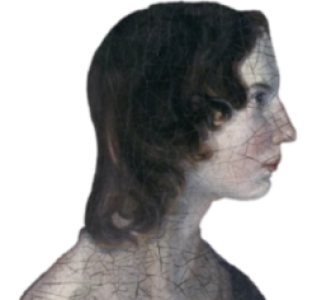
Charlotte Brontë, born on April 21, 1816, in Thornton, Yorkshire, England, was an English novelist and poet whose powerful storytelling and exploration of complex themes in Jane Eyre, Shirley, Villette, and The Professor left an indelible mark on English literature. She was the third of six children born to Patrick Brontë, an Anglican clergyman, and Maria Branwell Brontë. Her mother passed away when Charlotte was only five, leaving her father and Aunt Elizabeth Branwell, who had come to Haworth from Cornwall, to raise the children in the isolated parsonage of Haworth, West Yorkshire.
In 1824, Charlotte, along with her older sisters Maria and Elizabeth, was sent to the Clergy Daughters’ School at Cowan Bridge. The school, intended for the daughters of clergymen, was notorious for its harsh conditions, poor food, and lack of adequate heating. This difficult experience left a lasting impact on Charlotte; it was later portrayed in Jane Eyre through the character of Lowood School. The school’s conditions also contributed to the deaths of her sisters Maria and Elizabeth, who returned home severely ill in 1825 and died shortly afterward. Deeply affected by their loss, Charlotte and her remaining siblings—Branwell, Emily, and Anne—formed a tight-knit bond and found solace in each other’s company and imaginations.
The Brontë children began creating intricate imaginary worlds called Angria and Gondal, populated by characters and kingdoms inspired by their readings and their father’s gift of toy soldiers. Charlotte and Branwell mainly focused on the world of Angria, while Emily and Anne created Gondal. These imaginary worlds became their creative outlets, with Charlotte and Branwell producing stories, poems, and elaborate narratives. These early writings not only fostered Charlotte’s skills as a storyteller but also helped develop the psychological depth and emotional complexity for which her later work would be celebrated.
At 15, Charlotte attended Roe Head School, where she met lifelong friends Ellen Nussey and Mary Taylor. After completing her studies, she briefly returned to the school as a teacher, but her attempts to work in education were marked by inner conflict. In 1839, Charlotte became a governess, a role she found difficult and often demeaning. Her experience as a governess would later inspire her novel Jane Eyre, where the protagonist faces similar struggles with independence, identity, and social constraints.
In 1842, Charlotte and Emily traveled to Brussels to study at the Pensionnat Heger, hoping to learn French and German and gain the skills needed to open their own school. Charlotte developed a deep attachment to Constantin Heger, the school’s married director, who became a mentor and an important influence on her intellectual development. This unrequited relationship, combined with feelings of homesickness, led to a period of intense emotional struggle for Charlotte. Her experiences in Brussels deeply influenced her writing, particularly her novel Villette, where themes of unrequited love, isolation, and psychological tension are prominent.
Returning to England, Charlotte attempted to establish a school in Haworth with her sisters, but they were unable to attract enough students. In 1846, she and her sisters published a collection of poems under the pseudonyms Currer, Ellis, and Acton Bell to protect their privacy and avoid prejudice against female authors. Though the collection sold poorly, it marked the beginning of their literary careers. The following year, Charlotte completed her first novel, The Professor, which was rejected by several publishers but later published posthumously. Undeterred, she began work on Jane Eyre, which was published in 1847 to immediate success and acclaim.
Jane Eyre was revolutionary for its time, exploring themes of social class, morality, religion, and women’s autonomy in a deeply personal and psychologically complex way. The novel’s success transformed Charlotte into a literary sensation, and she quickly followed it with Shirley (1849) and Villette (1853). Shirley, influenced by the social and economic unrest of the time, tackled industrial struggles and the role of women, while Villette drew heavily from her experiences in Brussels and explored themes of love, identity, and alienation.
However, the success of her literary career was overshadowed by family tragedies. In 1848, her brother Branwell died from tuberculosis, followed by Emily and then Anne the following year. Their deaths left Charlotte devastated and alone with her elderly father. She continued to write but found solace in few places outside of her work and friendships with literary figures, including Elizabeth Gaskell, who would later become her biographer.
In 1854, Charlotte married Arthur Bell Nicholls, her father’s curate. While their marriage brought her companionship, her health soon deteriorated. She became ill, most likely with tuberculosis, though some speculate she also suffered from pregnancy complications. Charlotte died on March 31, 1855, at the age of 38, leaving her father as the last surviving member of the Brontë family.
Charlotte Brontë’s life was marked by profound loss, isolation, and inner resilience. Her works, especially Jane Eyre, broke new ground in literature, highlighting themes of women’s independence, moral integrity, and emotional depth. Through her novels, she challenged Victorian social norms and offered a powerful voice for women’s rights and self-determination, securing her place as one of English literature’s most enduring and celebrated authors.
 emilybrontë.com