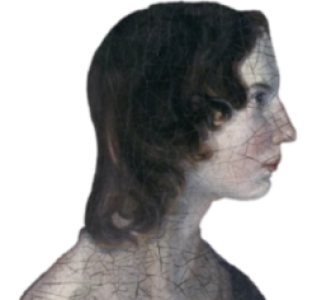
Branwell Brontë, the only son of the Brontë family, was born on June 26, 1817, in Thornton, Yorkshire, England. As the fourth of six children, he was surrounded by his sisters—Maria, Elizabeth, Charlotte, Emily, and Anne. His father, Patrick Brontë, an Anglican clergyman, and his mother, Maria Branwell Brontë, had high hopes for their son, seeing him as the family’s potential breadwinner. However, Branwell’s life was marked by both promise and tragedy, ultimately overshadowed by addiction and failure.
After the family moved to Haworth in 1820, Branwell’s early years were spent in the isolated parsonage, where he formed a close bond with his sisters. They developed an intense creative world, inventing imaginary kingdoms called Angria and Gondal, populated by fictional characters that they brought to life through elaborate stories. Branwell was particularly engaged in creating the world of Angria with Charlotte, where he exercised his love for storytelling, a gift nurtured by the Brontë family’s library of classics, including Shakespeare, Milton, and Byron. Early on, Branwell showed a talent for both art and poetry, and his family believed he would become an accomplished writer or painter.
As a teenager, Branwell developed an interest in the arts, encouraged by his father. At 17, he was sent to London in 1835 to pursue formal art training at the Royal Academy. However, lacking financial resources and struggling with homesickness, he quickly returned home without gaining significant instruction. Nevertheless, he continued to sketch, paint portraits, and write poetry, which was often praised by those close to him. Branwell aspired to make a name for himself, but his lack of formal training and instability often stymied his efforts.
In 1840, Branwell took up a position as a tutor with the Postlethwaite family in Broughton-in-Furness, marking the beginning of a series of jobs that he would take on but struggle to maintain. After a short tenure as a tutor, he worked as a clerk on the Manchester and Leeds Railway, hoping for a steady income. However, he was dismissed in 1842 for alleged negligence and mismanagement of funds, though some sources suggest this may have been influenced by his growing issues with alcoholism. This dismissal left Branwell despondent, contributing to a downward spiral into depression and heavy drinking, habits that would plague him for the rest of his life.
In 1843, Branwell’s life took a dramatic turn when he began working as a tutor for the Robinson family at Thorp Green Hall, where his sister Anne was already employed as governess. Branwell became close to Lydia Robinson, the lady of the house, and eventually developed a romantic attachment to her. Their relationship, reportedly an affair, became one of the defining events of Branwell’s life. When Mr. Robinson discovered the liaison, Branwell was dismissed from his position in 1845, and his relationship with Lydia ended, leaving him heartbroken. The scandal further fueled Branwell’s descent into addiction, as he turned increasingly to alcohol and laudanum (a form of opium) to cope with his sense of failure and loss.
This period also marked a time of immense hardship for the Brontë family. Branwell’s worsening addictions placed emotional and financial strain on his father and sisters, particularly on his sisters, who were often torn between frustration with his behavior and sympathy for his struggles. Despite his ambitions and undeniable talents, Branwell was unable to publish his work or secure a stable position, and he began living in the shadow of his more successful sisters, particularly Charlotte, whose literary career had begun to flourish.
In his later years, Branwell’s physical and mental health deteriorated rapidly. He withdrew from the family’s creative pursuits and lived in near-isolation, battling the effects of his addiction. His poetry and painting, once sources of pride and promise, were largely abandoned. Although his sisters’ novels achieved critical acclaim, Branwell saw little success himself, a reality that compounded his sense of inadequacy. Some biographers believe that he envied his sisters’ accomplishments, while others suggest he admired and was proud of their achievements but felt overshadowed by them nonetheless.
Branwell Brontë died on September 24, 1848, at the age of 31, likely from complications related to tuberculosis, though his weakened condition from alcoholism and laudanum abuse also contributed to his decline. His death marked the beginning of a tragic period for the Brontë family, as Emily and then Anne would pass away within the next year.
Though Branwell Brontë’s life was marred by struggle and unfulfilled potential, his creative influence on his siblings, particularly in the early days of their imaginative worlds, was undeniable. His artistic legacy, including surviving sketches, paintings, and poems, reveals glimpses of the talent and vision he possessed. His life story, filled with ambition, talent, and tragedy, continues to resonate as a cautionary tale of promise undermined by personal demons, casting a somber light on the resilience and achievements of his more famous sisters. Today, he is remembered as an integral part of the Brontë family’s literary legacy, a talented yet troubled soul whose brief life had a lasting impact on the family that shared his dreams and sorrows.
 emilybrontë.com