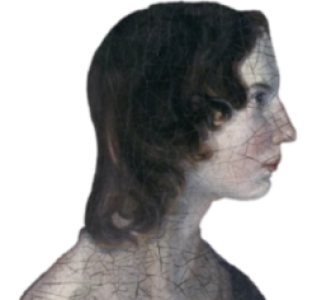
Emily Brontë’s Experiences in Brussels in 1842: A Journey of Solitude, Learning, and Unfulfilled Yearnings
In early 1842, Emily Brontë undertook a transformative journey to Brussels, Belgium, alongside Charlotte. Though her time in the city was brief—spanning only from February to November—the emotional and intellectual impact of this experience would linger for the rest of her brief life. Unlike Charlotte, who later used her Brussels experiences as direct inspiration for novels like Villette, Emily’s time there is often overlooked. Yet, beneath the surface, Brussels deepened her inner world, intensified her love for solitude, and contributed to the distinct themes of isolation and emotional extremes that would characterize her masterwork, Wuthering Heights. This post delves into Emily’s relatively short yet impactful time in Brussels, offering insights into how the experience shaped both her personality and her writing.
The Context: Why Brussels?
Emily, much like her sisters, was not a traveler by nature. The wild, untamed beauty of the Yorkshire moors was where her heart thrived, and her creative spirit soared. Yet, in 1842, Emily and Charlotte left the secluded, windswept landscapes of Haworth for a more practical endeavor: they traveled to Brussels for an educational experience. The goal of this trip was driven by pragmatism rather than adventure. The sisters planned to attend the Pensionnat Héger, a well-regarded girls’ school run by Constantin Héger and his wife, Claire Zoë Parent, with the intention of refining their French and German language skills.
The ultimate dream? To return to England, armed with knowledge and linguistic fluency, and establish their own school. This would provide the Brontë sisters the financial independence they so craved. Though the plan was carefully thought out, the sisters were likely unprepared for how foreign and unsettling life in Brussels would feel, particularly for the deeply introverted Emily.
Emily’s Activities in Brussels
During her time in Brussels, Emily’s natural aptitude for learning truly came to the forefront. At the Pensionnat Héger, she distinguished herself as an exceptional student, particularly in the study of French and German, where her intellectual curiosity shone. Known for her intensity and focus, she spent long hours working on translations, writing essays, and immersing herself in the complexities of these foreign tongues. Her linguistic skills, which had been nurtured in the quiet of Haworth, flourished in Brussels, allowing her to master the languages she studied.
But Brussels wasn’t just about academic development for Emily. Music was another solace for her during this emotionally tumultuous period. She spent time playing the piano at the school, often retreating to this creative outlet when the social demands of the Pensionnat Héger became too overwhelming. Music provided Emily with the refuge she needed—a way to retreat from the world while still engaging with a form of emotional expression. These moments at the piano, where she could be alone with her thoughts, likely mirrored the inner landscapes that would later come to life in her poetry and fiction. However, while her intellect thrived, the city’s bustling, urban energy contrasted sharply with her deep-seated need for isolation, leaving her emotionally unmoored.
Charlotte Brontë’s Love for Constantin Héger
While Emily withdrew into her intellectual pursuits and personal isolation, her sister Charlotte experienced a more emotionally turbulent time in Brussels, one that would later become the foundation for much of her writing. Charlotte became deeply enamored with Constantin Héger, their teacher at the Pensionnat. Héger, an energetic, passionate educator, ignited Charlotte’s mind, and what began as a professional admiration soon blossomed into something far more intense.
Charlotte’s love for Héger was deeply unrequited, a fact that only magnified the depth of her feelings. Héger, though kind and encouraging toward his pupil, maintained a strict emotional distance due to his own marriage and personal boundaries. This unfulfilled love profoundly impacted Charlotte, both personally and creatively. After returning to England, she continued to write to Héger, pouring her feelings into these letters, though they often went unanswered. The emotional intensity of this unreciprocated affection would later fuel the themes of yearning, passion, and isolation in novels like Villette and The Professor. For Charlotte, Héger symbolized the unattainable, and her love for him became the emotional landscape on which many of her characters would navigate.
The Pensionnat Héger: A World of Strangers
For Emily, life at the Pensionnat Héger was a study in contrasts. While her mind blossomed under the intellectual rigor of her studies, her spirit recoiled from the social demands of the school. Emily was inherently uncomfortable around strangers, a personality trait that made her time in the bustling, urban environment of Brussels all the more challenging. Unlike Charlotte, who, despite her emotional turmoil, sought out connection and social engagement, Emily withdrew into herself, reinforcing the isolation that had always been a part of her personality.
Though she was an excellent student, excelling in her studies of both French and German, Emily found the school’s communal atmosphere suffocating. The more polished and worldly Belgian students only heightened her sense of detachment. She was far removed from the familiar rhythms of the Yorkshire moors, and her deep discomfort with the social intricacies of the Pensionnat was palpable. In a letter, Charlotte poignantly described Emily as “as much out of place as a snowdrop in a storm,” capturing the sense of fragility and isolation her sister felt during their time in the foreign city. The social life of Brussels was a world of strangers to Emily, and she remained resolutely apart, yearning for the quiet solitude of Haworth.
The Cultural Shock of Brussels
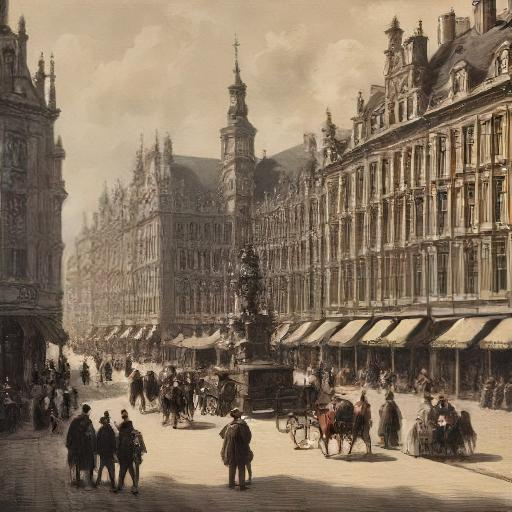
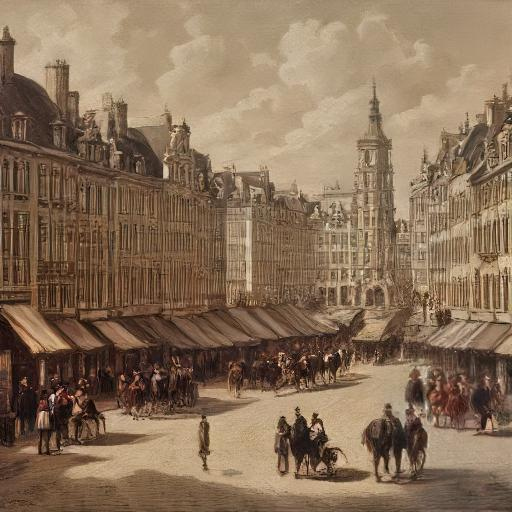
The Brussels of the 1840s was a city in flux—a vibrant crossroads of European intellectual life, where Catholic traditions and bourgeois sensibilities dominated the social and cultural landscape. For Emily, raised in the Protestant quiet of the English countryside, this strict Catholic culture was alien and even unsettling. The rituals, hierarchical structure, and formalized religion she encountered in Brussels clashed deeply with her own more natural, personal spirituality. The city felt constraining, its customs foreign and at odds with her own inner world.
Yet, for all its strangeness, Brussels did offer Emily a new perspective. The city exposed her to different social structures, worldviews, and languages, broadening her horizons, albeit in ways that left her feeling more isolated than connected. These encounters with a culture so different from her own would subtly find their way into her writing, influencing the themes of isolation, class difference, and societal constraints that pervade Wuthering Heights. In many ways, Brussels sharpened Emily’s sense of otherness—a feeling that would be deeply embedded in her work and in her view of the world.
Learning and Growth: A Paradox of Loneliness
For all its discomfort, Brussels was a place of significant intellectual growth for Emily Brontë. Her linguistic abilities in both French and German reached new heights during her time at the Pensionnat Héger, and these languages became an important tool for her later poetic and literary works. Her mind, always sharp and curious, found nourishment in the new knowledge and ideas she encountered in Brussels.
Yet, this growth came at a personal cost. Brussels was a paradox for Emily: a place that expanded her intellectual capabilities but deepened her emotional solitude. She grew homesick for the moors of Yorkshire, where she could wander freely without the pressures of social convention. The vibrant social life of the city seemed like a distant, unreachable world, and Emily retreated ever further into herself. Her reaction to Brussels was one of internalization—turning away from the external world to focus on the inner landscapes of her mind.
Unlike Charlotte, who would later use her Brussels experiences as direct inspiration for her novels, Emily’s response was quieter, more personal. Her time there marked a period of inward retreat, a retreat that would ultimately crystallize her fierce independence and solitary nature. If Brussels had any lasting influence on Emily, it was in reinforcing her conviction that the world outside her beloved moors was alien and unwelcoming.
The Aftermath: Returning to Haworth
In October 1842, Emily and Charlotte were called back to Haworth by the sudden death of their aunt Elizabeth Branwell. This return marked the end of Emily’s Brussels experience, but it was also a return to the place where her creative spirit had always thrived. The emotional discomfort of Brussels had only strengthened her resolve to immerse herself in the natural world of the Yorkshire moors, where she felt most at home.
Upon her return, Emily withdrew into the sanctuary of her imagination, pouring her experiences into her writing. The solitude of the moors became her refuge, and it was there, in the wild, untamed landscape she loved, that she would begin work on Wuthering Heights. The emotional turbulence and themes of alienation and isolation that defined her Brussels experience found a new, heightened expression in her novel. Wuthering Heights is, in many ways, a reflection of Emily’s response to the constraints of the world she encountered in Brussels: a rebellion against societal norms and an exploration of the power of raw, uncontained emotion.
A Necessary Discomfort
Emily Brontë’s time in Brussels is often overshadowed by Charlotte’s more dramatic experiences, but for Emily, it was a pivotal moment of personal and intellectual growth. It forced her to confront the world beyond her insular existence in Yorkshire and, in doing so, deepened her retreat into the inner landscapes of her imagination. Her experiences in the city were not of romantic intensity, as Charlotte’s were, but of quiet, personal discomfort—a necessary tension that would later find expression in her writing.
In the end, Brussels may not have transformed Emily in the ways it did Charlotte, but it did clarify her sense of self, reaffirming her preference for solitude, the wildness of nature, and the untamed passions that would later define her work. Wuthering Heights, with its haunting moors and ferocious characters, is perhaps Emily’s final answer to the disquiet she felt during her months in Brussels: a rebellion against the constraints of society and a testament to the power of wild, uncontained emotion.
 emilybrontë.com