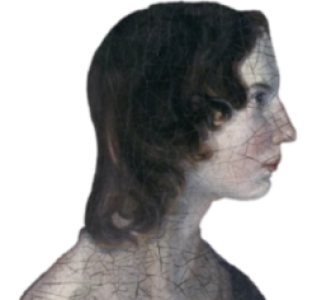
What would Emily Brontë have made of the staggering success of ‘Wuthering Heights’ had she lived long enough to see it? Further to this, on a literary level, what would she have made of the position that her sole novel holds in the upper echelons of English literature today? As reluctant to seek out new friendships beyond the front door of the parsonage as she was to allow anyone, or anything, to change her steadfast ways, we can only imagine what she would have made of her immortality now.
Of course, this is a question we will never be able to answer but I can’t help but feel that with her reclusive, deeply private and evasive nature she would have very much struggled to come to terms with what’s unfolded since her untimely passing. There are so many unanswered questions, perhaps she would have been outwardly horrified and at the same time quietly amazed in equal measure. Perhaps the all-important desire to retain an invisible defence around herself would have been too great to bear had she, in her lifetime, become famous and sought out by curious literary peers wishing to meet her, as happened with her sister Charlotte.
Not forgetting that it was Charlotte who was the initial driving force behind the sisters’ efforts to get their poems published – and we can only gratefully thank her for doing so – it is staggering to think of what may never have followed had perhaps Anne not agreed with Charlotte to seek a publisher and thus practically force a reluctant Emily to follow suit.

While we can only speculate about what Emily’s thoughts on her literary status would have been, one thing remains clear: her enduring legacy and literary impact will continue to transcended time. Regardless of her perspective on fame, ‘Wuthering Heights’ continues to captivate readers and inspire new generations of writers to delve into the mysteries of her world. It is also human nature to be curious about the personality of someone so talked about and yet so little known. That juxtaposition that myth and legend builds up over time verses the reality of a painfully shy Anglican minister’s daughter living on the edge of the moors in Yorkshire trying to find her life’s purpose.
While we continue to try and unravel the eternal question of what Emily would have thought of her immortality, we also are reminded of the ambiguous meanings littered throughout ‘Wuthering Heights’ and the fact that this ambiguity is simply a clear reflection of the woman herself struggling to find her path. It is this very enigma that perpetuates the mystery that continues to surround her to this very day and drives us deeper into the continued search to discover the real Emily.

In the end, the question remains an unanswered one, leaving us with an enduring, and perhaps reluctant celebrity, that will forever captivate and intrigue those who seek to try to unravel the secretive and insular persona of Emily Brontë. Future generations with fresh eyes and new thoughts about her will emerge, more dialogue will be spoken, more volumes written and the same ground where she once trod in quiet solitude will continue to call those seeking to get closer to her. How she would have felt about that is truly anyone’s guess.
 emilybrontë.com